Teldio
Teldio has been a Motorola Solutions partner for more than 15 years and is an authorized MOTOTRBO application provider, which is why its products run on the radio systems we already design and install. The company is also a technology partner with Avigilon and Avtec.

Featured Teldio Products


Teldio builds the software that ties separate systems together. Its platform connects two-way radios, video surveillance, access control, fire panels, sensors, and industrial equipment so that an event in one system can trigger the right response in another — without anyone having to watch a screen and make a phone call.
For most organizations, that solves a problem they have lived with for years: the cameras work, the radios work, the access control works, and none of them talk to each other. Teldio sits in between them.
Software That Connects What You Already Own
Teldio is not a replacement for your cameras, radios, or door controllers. It is a layer above them. That matters when you have equipment from several manufacturers installed over many years and no appetite for starting over.
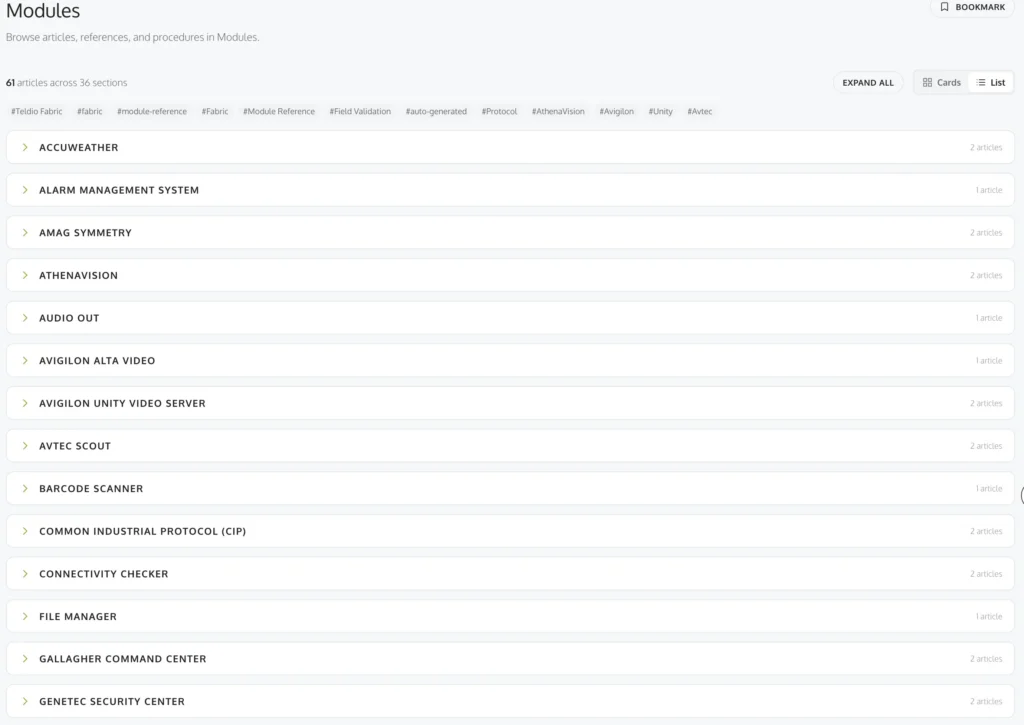
Teldio’s platform supports integrations with hundreds of systems and protocols, including the video and access control brands we install — Avigilon, Milestone, Genetec, Honeywell — alongside industrial protocols like Modbus, OPC, and MQTT. If a system can report an event, it can usually be brought in.
Turning Alarms Into Action
The practical value shows up in what happens after an alarm. Instead of an alert appearing on a monitor and waiting for someone to notice it, Teldio can route it — as a text message to a specific radio, a voice announcement over a talkgroup, an email to a supervisor, or a command to another system entirely.
Rules are built once and then reused. A door forced open after hours, a machine running hot, a panic button pressed, a fire panel in trouble — each can have its own defined response, and each response reaches the people who need it on the device they already carry.
What This Supports in Daily Operations
- Alerts delivered straight to two-way radios instead of a monitor no one is watching
- Camera, access control, and alarm events correlated into a single picture of an incident
- Fewer nuisance alarms, because rules filter and group them before anyone is notified
- Location awareness for vehicles, crews, and equipment on the radios already in service
- Automated response steps that run the same way on every shift
- A documented record of what happened and who was notified
Built for Two-Way Radio Environments
Most integration platforms treat radio as an afterthought. Teldio started there. Its products are built for Motorola MOTOTRBO systems and handle radio-specific realities — talkgroups, private and group calls, text to radio, emergency signaling, GPS reporting from the radio itself.
For organizations that run radios as their primary communication tool — plants, schools, municipalities, utilities — that means alerts arrive on the device people actually have in hand, not on a phone left in a locker.
Hardware and Software, Working Together
Some connections cannot be made over a network. Fire panel relays, dry contacts, serial devices, older controllers, and cabled radio links all need a physical interface. That is what the Teldio Edge Gateway provides, and it is designed to work alongside the software rather than instead of it.
The practical benefit is resilience. Local connections keep working during a network interruption, and the software handles the logic above them.
Designed to Scale Across Sites
Once a workflow is built, it can be deployed again — at another building, another plant, another campus — without rebuilding it. Organizations that start with one facility and grow into several tend to get more value from Teldio over time, not less.
Deployment options cover on-premises and hybrid installations, with encrypted communication, role-based user permissions, and audit logging built in.
Specified, Installed, and Supported Locally
Integration projects fail in the details — which event maps to which action, which radio ID gets which alert, what happens when a system is offline. That work is design work, and it is the part we do.
We assess what you already have installed, determine what can be connected, configure the workflows around how your teams actually operate, and stay on as the system changes. When a camera is added, a talkgroup is restructured, or a plant line moves, the integration gets updated with it.
Let’s Connect
If you are running radios, cameras, and access control that don’t work together, there is usually more capability sitting in your existing equipment than you are getting out of it. Let’s take a look at what you have and what it could do. Contact us or call 330-454-8404.
Let's Connect.
Our user-friendly systems will move you toward your goals. Discover why we are a trusted partner for both small teams and complex organizations.