Mass Notification Systems That Connect Your Radios and PA in One Click
A mass notification system is an integrated platform that lets a single user broadcast a live or pre-recorded message — lockdown, evacuation, weather alert, all-clear — across an entire facility in seconds.
Table of Contents
- What Is a Mass Notification System?
- How Radio-to-PA Integration Works
- The Four Components of an Integrated Mass Notification System
- The Five Benefits of an Integrated Mass Notification System
- Where Mass Notification Coverage Reaches
- Industries We Serve with Mass Notification Systems
- Designing and Installing Your Mass Notification System
- Frequently Asked Questions
- Build a Connected Emergency Plan with Staley Technologies
Mass Notification Solutions
Staley Technologies designs and installs mass notification solutions that connect Motorola two-way radios directly to your PA system, giving manufacturers, schools, hospitals, churches, and municipalities one-click emergency communication coverage from any point on-site. When every second counts, a connected system is the difference between controlled response and chaos.
Because Staley handles the entire solution in-house—design, integration, installation, and support—you work with one accountable partner instead of coordinating multiple companies to piece your system together. When every second counts, a connected system is the difference between controlled response and chaos.
What Is a Mass Notification System?
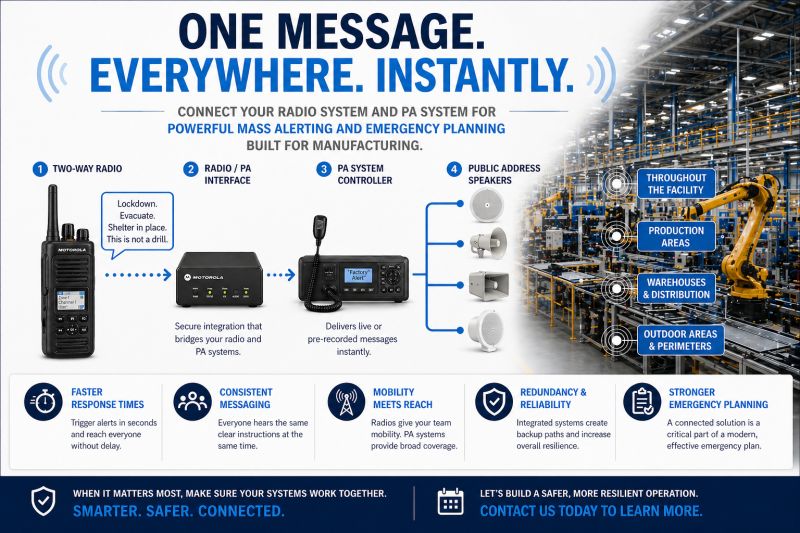
A mass notification system is a coordinated communications platform that enables one person to instantly alert an entire building, campus, or campus network with a single transmission. Mass notification systems combine hardware and software to ensure every person in a facility hears the same message at the same time, regardless of their location. A fully integrated system links four core components: a two-way radio that initiates the alert, a radio/PA interface that bridges the signal, a PA system controller that manages zones and message delivery, and public address speakers that broadcast the alert throughout the facility.
How Radio-to-PA Integration Works
Radio-to-PA integration works by creating a direct, real-time bridge between a portable two-way radio and a facility’s public address infrastructure. When a user keys their radio and speaks — or triggers a pre-recorded alert — the signal passes through a radio/PA interface that translates it for the PA controller, which then broadcasts it simultaneously across every speaker zone in the facility. The result is instant, facility-wide coverage from any point on the property.
The Four Components of an Integrated Mass Notification System
Two-Way Radio
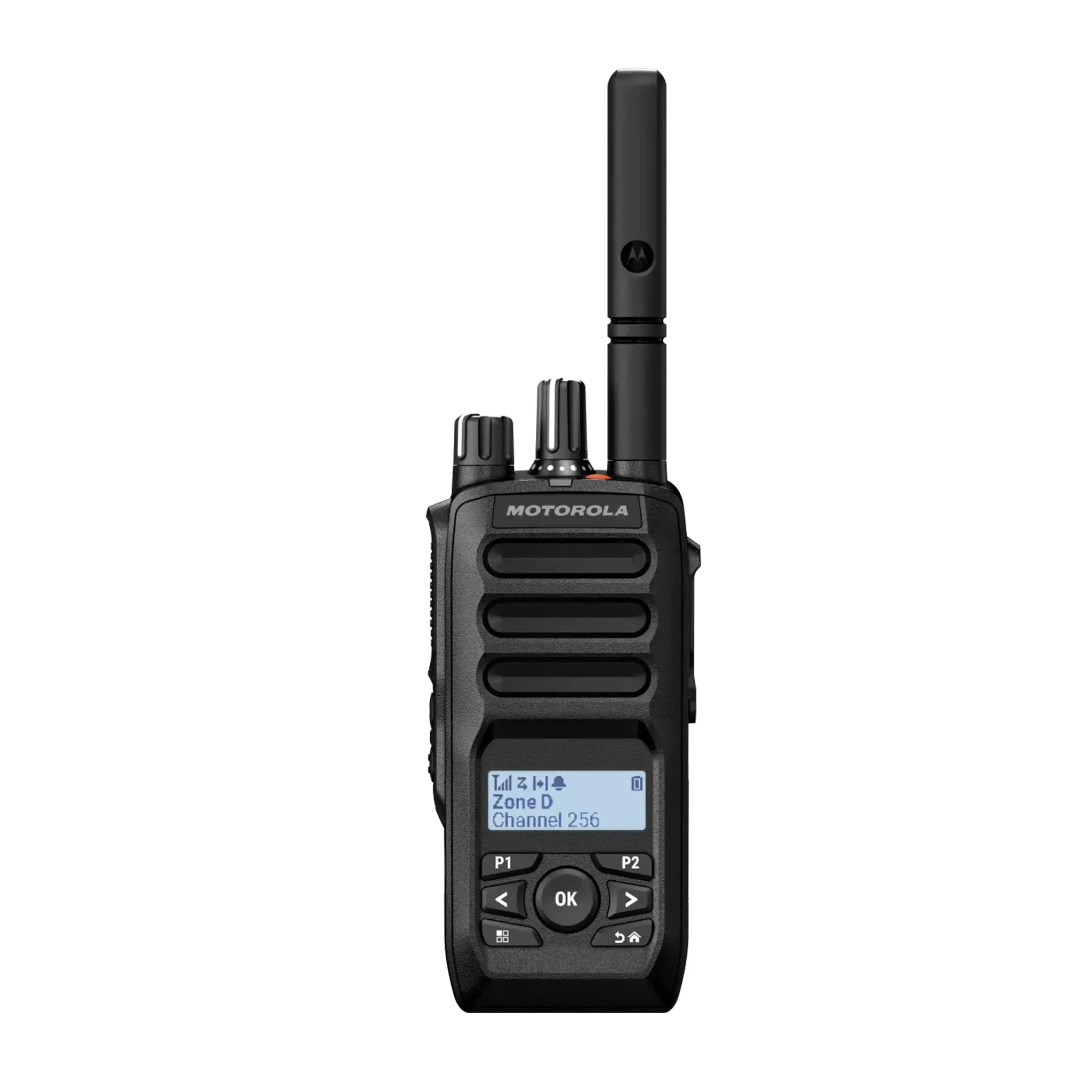
The two-way radio is the initiating device — the tool your team already carries. A Motorola portable radio (R5, APX series, or similar) allows any authorized user to trigger a live voice broadcast or pre-recorded alert from anywhere on the property, without returning to a central station. Two-way radios provide the mobility that fixed PA consoles cannot.
Radio/PA Interface
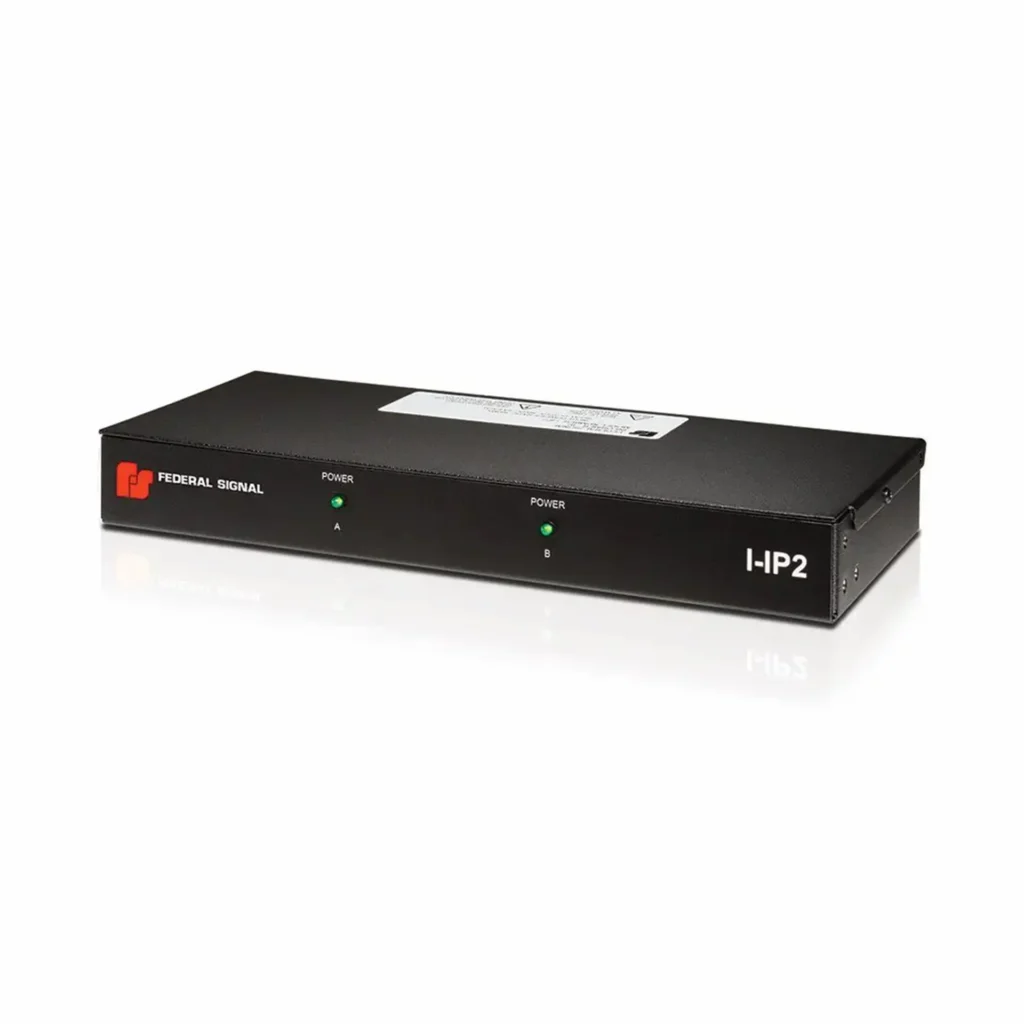
The radio/PA interface is the critical bridge between your radio network and your public address infrastructure. The interface listens for a designated radio channel, captures the incoming signal, and passes it to the PA controller in real time. Most facilities that lack a mass notification capability are missing this single component — the radio/PA interface is what makes radio-to-PA integration possible.
PA System Controller
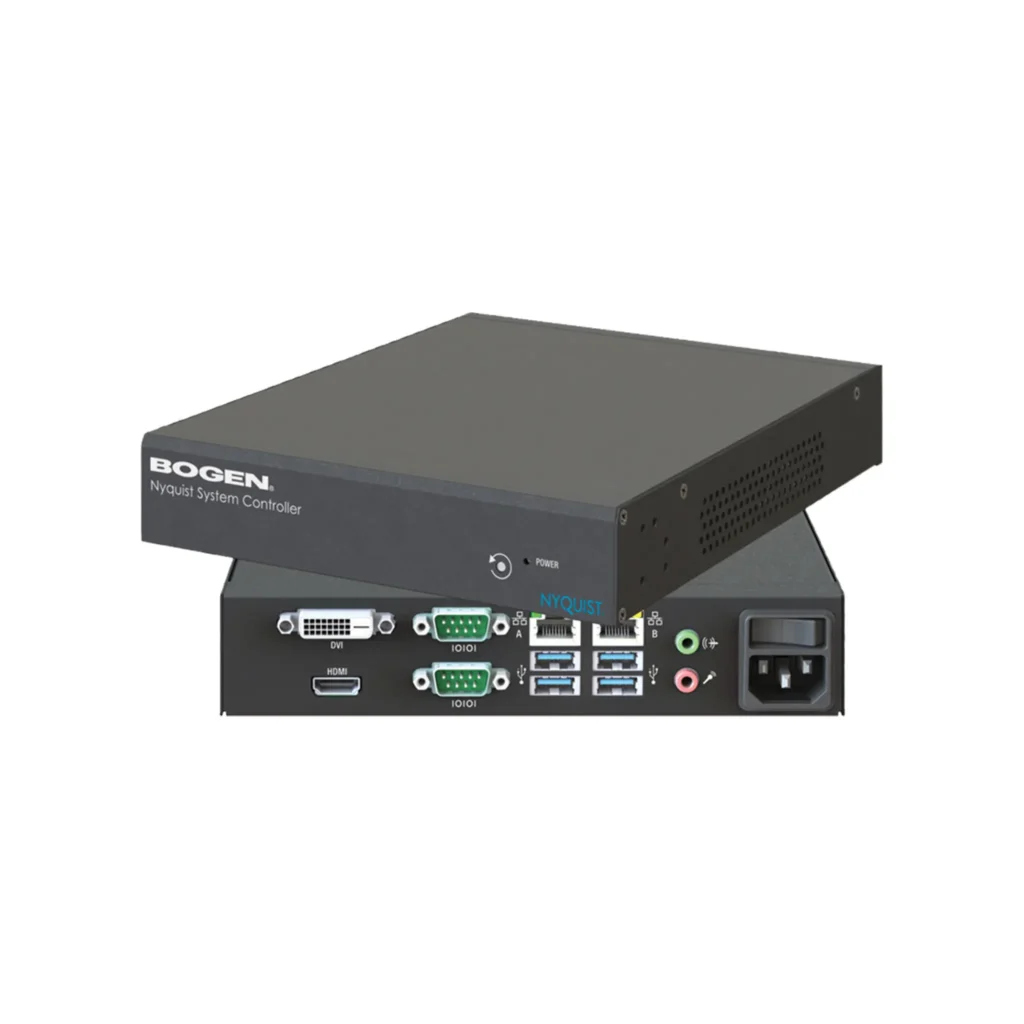
The PA system controller manages message routing, zone selection, and volume levels across the facility. The controller can deliver live radio broadcasts, pre-recorded alert sequences, or tone signals, and can target specific zones (production floor only, all zones simultaneously, outdoor areas only) depending on the nature of the emergency. Bogen controllers are a primary platform in Staley Technologies’ installations.
Public Address Speakers
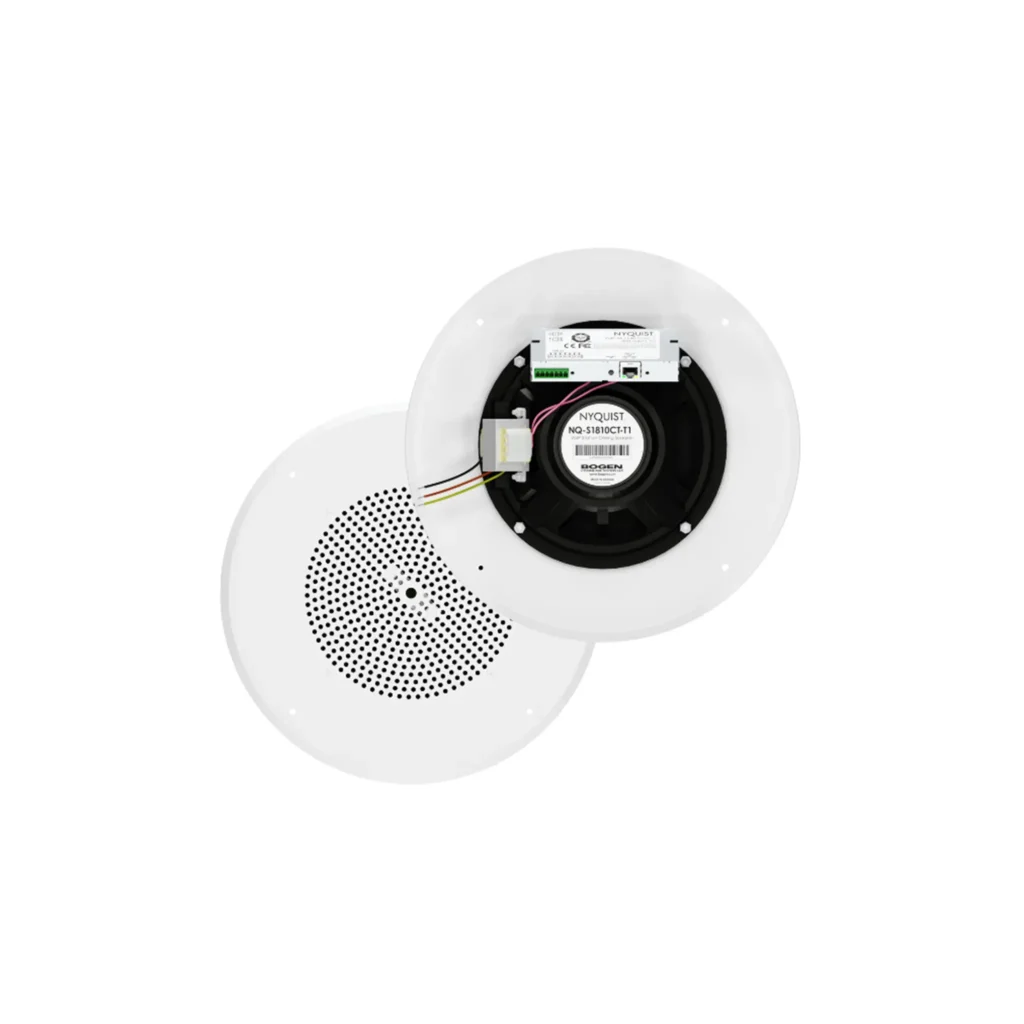
Public address speakers are the final delivery point — the hardware that ensures every person in the facility hears the alert. Mass notification installations use a combination of indoor ceiling-mount speakers, wall-mount speakers, production-floor horn speakers, and outdoor horn and pole-mount units to achieve full coverage across every area of the site, including warehouses, loading docks, parking areas, and perimeter zones.
The Five Benefits of an Integrated Mass Notification System
An integrated mass notification system delivers advantages that disconnected tools — standalone radios or PA consoles operated separately — cannot match. Mass notification integration changes how facilities respond to emergencies at every stage, from initial alert to all-clear.
- Faster Response Times
Integrated mass notification systems reduce alert initiation from minutes to seconds. Because the radio and PA system operate as a single platform, the person holding a radio — a security officer, plant manager, or school administrator — can reach every person in the facility immediately without relying on a separate operator at a PA console. Faster alerts mean faster evacuation, faster lockdown compliance, and better outcomes. - Consistent Messaging
Mass notification systems ensure that every person in a facility hears the same message, in the same words, at the same time. Consistent messaging eliminates the confusion and conflicting instructions that occur when emergency information passes through multiple people before reaching the floor. One transmission, one clear message, delivered facility-wide — every time. - Mobility Meets Reach
Two-way radios give your response team mobility. PA systems give your facility broad audio coverage. Mass notification integration combines both capabilities into a single platform, so your team is no longer forced to choose between being in the field and having the ability to broadcast to the full facility. Mobility and reach operate together, not in isolation. - Redundancy and Reliability
Integrated mass notification systems create backup communication pathways that increase overall facility resilience. When a single communication channel fails — internet outage, power disruption, or cellular congestion during a major event — the radio-to-PA pathway operates independently of network infrastructure. Redundancy ensures your emergency communication capability remains intact when it is needed most. - Stronger Emergency Planning
A connected mass notification system is a foundational component of any modern emergency preparedness plan. Mass notification integration supports compliance with OSHA emergency action plan requirements, NFPA life safety codes, and industry-specific regulations for schools, healthcare, and public facilities. A documented, tested, and integrated system demonstrates due diligence and strengthens your organization’s overall safety posture.
Where Mass Notification Coverage Reaches
Mass notification coverage extends to every area of your facility — not just the areas where people have desks or workstations. A properly designed mass notification system accounts for the full footprint of your operation, including spaces where personnel may be isolated from standard communication channels.
- Throughout the facility — All interior zones, including offices, lobbies, corridors, and common areas, covered by ceiling-mount and wall-mount speakers.
- Production areas — Manufacturing floors, assembly lines, and processing areas covered by high-output horn speakers rated for high-ambient-noise environments.
- Warehouses and distribution — Large-span warehouse environments and loading dock areas covered with strategically positioned horn and pendant speakers.
- Outdoor areas and perimeters — Parking lots, outdoor work areas, perimeter fencing, and campus grounds covered by weatherproof outdoor horn speakers and pole-mount units.
Industries We Serve with Mass Notification Systems
Mass notification systems are a horizontal capability — the same radio-to-PA integration that protects a manufacturing plant also protects a school, hospital, or house of worship. Staley Technologies installs and services mass notification systems across every major vertical market it serves in Ohio and the surrounding region.

Manufacturing Communication Systems
Improve safety, security and productivity with plant-wide paging, door locks, alarms, and video that keep everyone working together.

School Security
Protect students and staff with secure entry, campus-wide paging, and clear everyday communication.

Healthcare Security
Enhance patient care and operational efficiency with integrated communication and security systems for healthcare facilities.

Church Security Systems
Create a safe, welcoming place to gather with clear sound, video, and discreet security that supports your congregation without getting in the way.

Municipal Communication Systems
Keep buildings, crews, and equipment coordinated with surveillance, access control, and communication tools that support smooth daily operations.

Oil and Gas Communication Systems
Protect crews and assets in tough environments with communication, monitoring, and video systems built for remote, high-demand sites.
Designing and Installing Your Mass Notification System
A mass notification system performs only as well as its design and installation. Staley Technologies provides end-to-end project delivery — from initial site assessment through final commissioning and system testing — ensuring that every component is specified for your facility’s specific layout, occupancy, and coverage requirements.
Security and Communication System Design
Staley Technologies’ design process begins with a comprehensive site survey that maps building footprints, identifies ambient noise zones, documents existing infrastructure, and establishes the coverage requirements for every area of the facility. The design team produces a zone map, message tree, speaker placement plan, and equipment specification before a single product is ordered.
Professional Installation
Staley Technologies’ installation teams handle all wiring, speaker mounting, controller installation, radio programming, interface configuration, and end-to-end system testing. Every mass notification installation is commissioned with a live test that verifies alert initiation, signal path integrity, zone routing, and speaker output across the full facility before the system is handed over.
Frequently Asked Questions
What is a mass notification system?
A mass notification system is an integrated communications platform that enables one authorized user to instantly deliver a live or pre-recorded alert — lockdown, evacuation, all-clear, or weather warning — to every person in a facility simultaneously. Mass notification systems combine two-way radios, a radio/PA interface, a PA system controller, and public address speakers into a single, coordinated emergency communication network.
How do mass notification systems work?
Mass notification systems work by linking two-way radio communication to a facility’s public address infrastructure through a radio/PA interface. When an authorized user keys a designated radio channel, the interface captures the signal and passes it to the PA controller, which routes it to every speaker zone in the facility in real time. Pre-recorded alerts can also be triggered from the radio, the controller, or integrated access control systems.
How do you implement an emergency mass notification system for a business or organization?
Implementing an emergency mass notification system begins with a site survey to assess building layout, ambient noise levels, existing infrastructure, and coverage requirements. A qualified integrator — such as Staley Technologies — then designs a system that specifies the appropriate radio platform, interface hardware, PA controller, and speaker types for each zone. The system is installed, programmed, and commissioned with a live end-to-end test before it is placed into service.
When is a mass notification system required?
Mass notification systems are required or strongly recommended by OSHA emergency action plan regulations (29 CFR 1910.38), NFPA 72 (National Fire Alarm and Signaling Code), and a growing number of state-level school and healthcare safety mandates. Beyond regulatory requirements, any facility with more than one building, high ambient noise levels, large outdoor areas, or more than approximately 50 occupants benefits from a formal mass notification capability.
How do you choose a mass notification system?
Choosing a mass notification system starts with understanding your facility’s specific requirements: the number and type of buildings, ambient noise levels, existing radio and PA infrastructure, required coverage zones, and the alert scenarios you need to support. Key evaluation criteria include system reliability, radio/PA compatibility, zone control flexibility, pre-recorded alert capability, and the integrator’s installation and service track record. A qualified integrator will assess your site and recommend a system matched to your needs.
How do you test a mass notification system before an emergency?
Mass notification systems should be tested quarterly at minimum, with a full end-to-end test conducted at least annually. Testing should verify radio-initiated alert activation, signal path integrity through the interface and controller, correct zone routing, and adequate speaker output in every coverage area. Staley Technologies recommends scheduling tests during non-peak hours and documenting results as part of your facility’s emergency preparedness record.
Why integrate two-way radios with a PA system instead of using them separately?
Two-way radios used alone require every person to have a radio to receive an alert — coverage is limited to the radio network. PA systems used alone require an operator at a fixed console to initiate a broadcast — response time depends on someone physically reaching the PA station. Radio-to-PA integration combines the mobility of radios with the broad coverage of a PA system, enabling any authorized radio user to initiate a facility-wide broadcast from anywhere on the property, in seconds.
Does a mass notification system work during a power or internet outage?
A properly designed mass notification system continues to operate during a power outage when supported by battery backup or generator power on the PA controller and interface hardware. Radio-to-PA mass notification systems do not rely on internet connectivity to function — the signal path from radio to interface to controller to speakers operates on the local RF and audio infrastructure. Staley Technologies designs mass notification systems with redundancy in mind and can specify backup power solutions appropriate for your facility.
Build a Connected Emergency Plan with Staley Technologies
When it matters most, make sure your systems work together. Smarter. Safer. Connected.
Staley Technologies has been designing and installing communication and security systems across Ohio for more than 60 years. With three locations — North Canton, New Philadelphia, and Wooster — and a Motorola Solutions Safety Reimagined partnership, Staley Technologies brings the regional expertise and manufacturer relationships to deliver mass notification systems that perform when lives depend on them.
Every engagement begins with a no-obligation site assessment. Talk to a Staley engineer about your facility, your coverage requirements, and the alert scenarios you need to be prepared for.

Technology that is smart and safe.
Let's Connect.
Our user-friendly systems will move you toward your goals. Discover why we are a trusted partner for both small teams and complex organizations.